





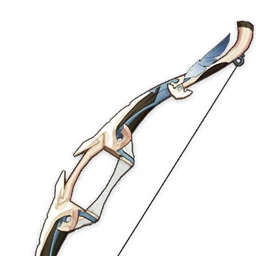
Understand Sharpshooter's Oath
Useful when…
- Use it when the wielder regularly hits weak spots.
- Consider it as a damage-focused option when the weak-spot condition is practical for the targets you face.
What does the passive affect?
At refinement 1, damage against weak spots increases by 24%; at refinement 5, the increase is 48%. The effect is specifically limited to weak spots. Its CRIT DMG secondary stat is listed, but scaling values by level are not provided.
When is it useful in combat?
This bow’s value depends on landing weak-spot hits. If you can target weak spots reliably, the passive supports that approach. If your attacks do not hit weak spots, the listed passive provides no benefit for those hits. The effect is not stated to boost all attacks or damage against any target.
Should you refine or ascend it?
Refinement raises the weak-spot damage bonus from 24% to 48% and uses a duplicate Sharpshooter’s Oath plus Mora. That is a direct improvement if weak-spot hits are a regular part of your play. Ascension advances the bow through six stages; example costs are listed for stages 0→1, 3→4, and 5→6.
How do other bows differ?
Alley Hunter’s damage bonus grows while its wielder is off-field, then declines after the character spends more than 4 seconds on-field. Amos’ Bow boosts Normal and Charged Attack damage, with additional damage based on how long arrows are in the air. Aqua Simulacra increases damage when opponents are nearby and works on- or off-field. Each has a different condition to consider for the intended attacks and field time.
Limitations and tradeoffs
- The passive applies only to weak-spot damage, so its usefulness depends on being able to hit weak spots.
- Refinement requires duplicate copies and increases a conditional bonus.
Common mistakes to avoid
- Do not treat the weak-spot bonus as a general damage increase.
- Do not refine it expecting a larger benefit on attacks that miss weak spots.