





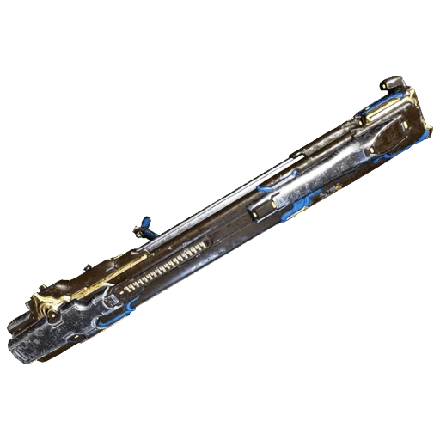
Understand Mausolon
Useful when…
- Automatic primary fire using its 300-round magazine.
- Using the charged laser and separate explosion as the described secondary attack.
- Considering its stated primary-to-secondary life-essence interaction.
Primary and charged attacks
The automatic attack fires at about 8.33 shots per second and lists 24 Impact, 46 Puncture, and 50 Heat, with 30% critical chance, a 2.2× multiplier, and 26% status chance. A separate auto radial attack lists 48 Heat. The charged laser has a listed 0.8-second charge_time and lists 100 Impact, 400 Puncture, and 500 Heat, with 50% critical chance, a 3.5× multiplier, and 50% status chance. Its separate explosion lists 3,000 Heat; explosion falloff ends at 8 metres with 40% reduction at that endpoint.
Life-essence interaction and handling
Mausolon’s description says primary fire siphons life essence from the target to fuel a devastating secondary fire. The primary holds 300 rounds and reloads in 5.5 seconds. Its listed primary attack is hitscan and has one base Madurai polarity. The primary and charged attack have separate listed attack values.
Other attack patterns
Cortege is described as a heavy flamethrower with an explosive secondary; Morgha’s description says its primary slugs siphon life essence used to generate a secondary air-burst mortar. Larkspur is described as having a normal attack that locks on and chains to nearby targets and a separate explosive projectile mode. These descriptions distinguish their handling from Mausolon’s automatic primary and charged beam. Its listed 100% reduction at the 2,800-metre primary falloff endpoint means full reduction at that endpoint.
Limitations and tradeoffs
- The primary reload is 5.5 seconds.
- The charged laser has a listed 0.8-second charge_time.
- The charged explosion has 40% reduction at its 8-metre falloff endpoint.
Common mistakes to avoid
- Attributing charged attack values to automatic fire.
- Treating the separate radial and charged explosion entries as the same attack.
- Calling 8 metres a radius rather than the charged explosion’s falloff end distance.